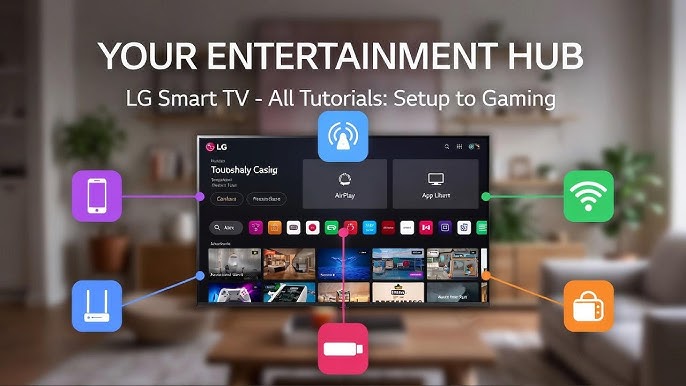
From its origins as a smartphone operating system to becoming the cornerstone of modern smart entertainment, LG’s journey with webOS represents one of the most remarkable pivots in consumer electronics history. This transformation didn’t just save a faltering mobile OS—it redefined the smart TV experience for millions of households.
The Unlikely Origins: From Palm to LG
LG’s smart TV story begins not in television labs, but in the mobile world. webOS was originally developed by Palm in 2009 as a pioneering smartphone platform featuring intuitive card-based multitasking. After passing through HP’s hands, LG acquired the technology in 2013, recognizing its potential not for phones, but for televisions.
At a time when smart TV interfaces were often clunky and slow, LG saw in webOS the foundation for something revolutionary: a television experience that felt fluid, intuitive, and genuinely smart. This strategic acquisition showcased LG’s forward-thinking approach to the connected home, a vision they’ve continued to develop across their product lines.
Engineering the Transformation
The technical challenges were substantial. Mobile operating systems are designed for touch interaction and small screens, not living room viewing and remote control navigation. LG’s engineers completely reimagined webOS for the television environment, creating:
-
The Now-Recognizable Launcher Bar: A simplified, elegant menu system that minimized interruption to content
-
Intelligent Content Discovery: Integration with leading streaming services for unified search
-
Magic Remote Innovation: Pointer-based control that made navigation precise and intuitive
-
Multi-tasking Capabilities: The card-based system adapted for television, allowing quick switching between apps
This engineering feat transformed a discontinued mobile platform into a television-specific powerhouse. According to industry analysis from TechRadar’s coverage of smart TV evolution, LG’s approach fundamentally shifted how manufacturers approached smart TV interfaces, moving from afterthought to centerpiece.
Creating a Developer Ecosystem
Critical to webOS TV’s success was LG’s commitment to building a robust app ecosystem. By making development accessible and supporting major streaming platforms, LG ensured that users had access to comprehensive content. The platform’s adoption by other television manufacturers further expanded its reach and viability.
The Streaming Media Blog highlights how LG’s partnership strategy with content providers created a virtuous cycle: more apps attracted more users, which in turn attracted more developers. This ecosystem approach proved crucial in competing against tech giants entering the television space.
Market Impact and User Experience Revolution
LG’s webOS transformation achieved what few platform pivots accomplish: it created a genuinely superior user experience that drove commercial success. Key innovations included:
-
Reduced Friction: The simplified interface cut down the steps between turning on the TV and watching content
-
Voice Integration: Later additions like ThinQ AI and Google Assistant compatibility
-
Home Automation Hub: Positioning the TV as a central control point for smart home devices
-
Continuous Refinement: Annual updates that added features without complicating the core experience
Industry data from Consumer Reports TV buying guides consistently highlights webOS as a differentiating factor in LG’s television lineup, particularly praised for its balance of capability and usability.
The Competitive Landscape and Future Vision
In a market increasingly dominated by proprietary systems (Samsung’s Tizen, Google’s Android TV/Google TV, and Roku’s platform), LG carved out a distinctive position by focusing on simplicity and elegance rather than sheer volume of features. The company continues to evolve webOS with cloud gaming integration, expanded voice controls, and enhanced smart home connectivity.
As noted in CNET’s analysis of TV operating systems, LG’s success demonstrates that superior user experience can triumph even without the largest app catalog. The platform’s focus on making television watching more enjoyable rather than turning the TV into a full-fledged computer has resonated with consumers.
Conclusion: Lessons in Strategic Adaptation
LG’s webOS story offers compelling lessons in technology adaptation:
-
Vision Beyond Original Purpose: Recognizing potential where others saw obsolescence
-
User-Centric Redesign: Completely rethinking interaction paradigms for new contexts
-
Ecosystem Building: Creating partnerships that enhance platform value
-
Iterative Excellence: Continuous improvement based on user feedback and technological advances
From mobile afterlife to television dominance, LG’s webOS journey represents a masterclass in strategic platform adaptation. It transformed not just a company’s product lineup, but elevated the entire smart television experience, proving that with the right vision and execution, even the most unlikely technologies can find revolutionary new life.
Sources for further reading on smart TV platform development include comprehensive analyses from leading technology publications that track the evolution of connected home entertainment systems.