Why LG Quit the Smartphone Race: A Strategic Analysis
LG’s decision to quit the smartphone market in 2021 marked the end of an era for a once-formidable player. This wasn’t a sudden collapse but the culmination of years of strategic challenges. This analysis breaks down the key factors behind LG’s smartphone exit, offering insights into the brutal dynamics of the global smartphone competition.
1. Chronic Financial Losses: The Unsustainable Equation
The most direct reason for LG quitting the smartphone business was money. For nearly six consecutive years, LG’s Mobile Communications Division bled cash, amassing over $4.5 billion in operating losses. In a market dominated by Apple and Samsung, LG’s dwindling market share (below 2% globally) couldn’t support the massive R&D and marketing costs required to compete. Shareholders and the parent company ultimately decided resources were better invested in more profitable ventures like home appliances and electric vehicle components.
2. Fierce Market Competition: Squeezed by Giants and Challengers
LG was caught in a perfect storm of smartphone competition. At the high end, Apple’s ecosystem and Samsung’s marketing prowess were insurmountable. At the mid and low end, relentless Chinese manufacturers like Xiaomi and Oppo offered exceptional value, quickly adopting new features (like multiple cameras) at aggressive prices. LG’s position became untenable—unable to command a premium brand price yet struggling to compete on cost-efficiency.
3. Inconsistent Branding and Marketing Strategy
While competitors built cohesive narratives (Apple’s “luxury experience,” Samsung’s “innovation for all”), LG’s mobile strategy was fragmented. The brand cycled through confusing series names (G, V, Q, K) and failed to establish a consistent identity. Memorable marketing campaigns were absent, leaving consumers unclear on what an LG phone stood for, especially against Google’s pure Android or Samsung’s feature-packed Galaxy line.
4. Innovation Misdirection: Pioneering Features That Didn’t Resonate
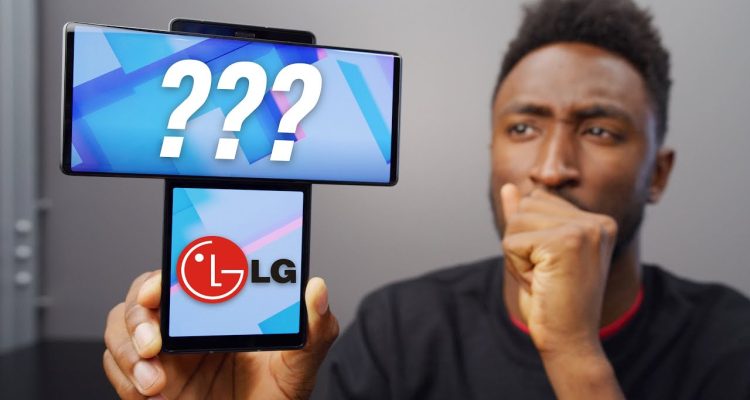
Ironically, LG was often a hardware pioneer. It introduced bold concepts like the modular LG G5, the dual-screen LG V10/V20, and the unique swiveling LG Wing. However, this smartphone innovation was often gimmicky rather than solving core user needs. These experiments were costly and sometimes compromised mainstream essentials like battery life or software update support, alienating the average consumer who prioritized reliability and ecosystem.
5. Software and Update Failures: The Achilles’ Heel
In an era where software experience became paramount, LG consistently lagged. Slow Android version updates and poor skin optimization led to perceptions of clunkiness and abandonment. This contrasted sharply with Google Pixel’s seamless experience and Samsung’s improved update pledges. For savvy consumers, LG smartphone software was a significant deterrent.
Strategic Lesson: Knowing When to Fold
LG’s exit from the smartphone market is a classic business school case study in strategic exit. It underscores that in hyper-competitive, scale-driven industries, perseverance without a clear path to profitability is not a strategy. LG’s decision to shutter its mobile division allowed it to cut losses and refocus on its B2B and core home entertainment strengths—a pragmatic, if sobering, conclusion.