While LG Electronics is a household name for its televisions and kitchen appliances, the company is quietly orchestrating a massive transformation behind the scenes. In 2026, LG is aggressively pivoting its business model to expand its B2B (Business-to-Business) portfolio, with a specific focus on Electric Vehicle (EV) charging infrastructure, automotive components, and smart factory solutions. This strategic shift is designed to reduce reliance on the volatile consumer electronics market and tap into the multi-billion dollar industrial technology sector.
Dominating the EV Charging Landscape
One of the most significant moves by LG Electronics in recent years has been its entry into the EV charging market. With governments worldwide mandating the phase-out of internal combustion engines, the demand for reliable, fast, and intelligent charging stations is skyrocketing.
At the recent Consumer Electronics Show (CES) 2026 and subsequent industry-specific trade fairs, LG unveiled its comprehensive EV charging strategy, which includes both residential and commercial solutions.
The LG AC Ultra Fast Charger
For the home market, LG has integrated its EV charger with its existing energy management ecosystem. The LG AC Ultra Fast Wallbox is a Level 2 charger that not only charges vehicles but also communicates with the home’s LG solar panels and battery storage system. Using the LG ThinQ app, homeowners can schedule charging during off-peak hours or when solar production is at its peak, maximizing energy savings.
Commercial DC Fast Charging Stations
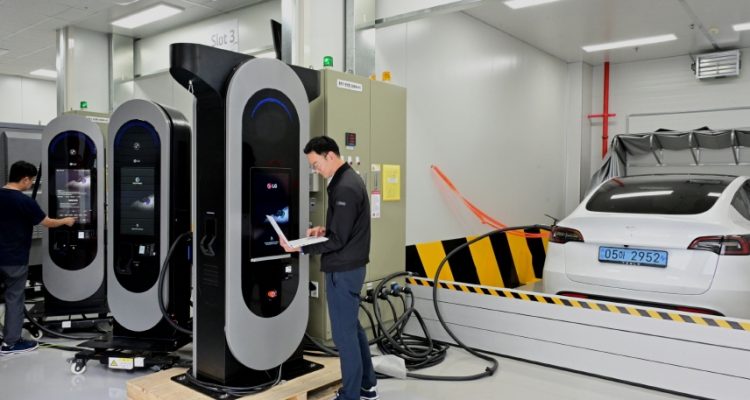
More importantly, LG is targeting the commercial sector with its new line of DC Fast Chargers. Ranging from 150kW to a staggering 350kW, these chargers can add up to 200 miles of range in just 15-20 minutes. These aren’t just functional poles; they feature large, 27-inch outdoor-rated touchscreens that display advertising, nearby amenities, and real-time grid status.
LG has partnered with several major convenience store chains and parking lot operators in the US and Europe to deploy these chargers. The strategy is to turn the “charging time” into “dwell time,” encouraging drivers to shop or grab a coffee while their vehicle charges. This creates a new revenue stream for property owners and positions LG as a key player in the “charging-as-a-service” economy.
Automotive Components: The Invisible LG
You may not see the LG logo on the dashboard of your next car, but chances are, you will be using LG technology. LG Electronics’ Vehicle Component Solutions (VS) Company has become a tier-1 supplier to many of the world’s leading automakers, including General Motors, Mercedes-Benz, and Hyundai.
The Next-Gen Digital Cockpit
At the 2026 Detroit Auto Show, LG demonstrated its next-generation Digital Cockpit concept. This isn’t just an infotainment system; it is a software-defined vehicle (SDV) hub. The cockpit features a massive, pillar-to-pillar display that merges the instrument cluster, navigation, and passenger entertainment into one seamless, curved LG OLED panel.
Using the new LG AlphaWare software suite, automakers can update features over-the-air (OTA) long after the car is sold. The system supports advanced hands-free driving interfaces, 3D navigation with augmented reality overlays, and in-car video conferencing for when the vehicle is stationary.
In-Cabin Sensing
Another breakthrough from LG’s VS division is the In-Cabin Sensing Camera. Using advanced radar and optical sensors, this system can detect the presence of a child or pet left in the back seat, sending immediate alerts to the driver’s smartphone and adjusting the climate control to prevent heatstroke. This safety feature is expected to become a standard requirement in new vehicle safety ratings by the end of the decade, and LG is positioning itself as the leading supplier of this life-saving technology.
Smart Factories and Robotics
Beyond vehicles, LG is also selling its manufacturing expertise. The company has developed the LG Smart Factory solution, a platform that uses digital twins, AI quality control, and autonomous mobile robots (AMRs) to optimize production lines.
LG is currently building a new Smart Park in South Korea, which will serve as a testbed and showcase for these technologies. The goal is to sell this integrated solution to other manufacturers worldwide, helping them achieve “lights-out” manufacturing—factories that can run autonomously with minimal human intervention.
Financial Outlook and Partnerships
The financial markets have reacted positively to LG’s diversification. In their Q1 2026 earnings report, LG Electronics noted that its B2B divisions, including EV components and HVAC (Heating, Ventilation, and Air Conditioning), accounted for over 35% of the company’s total revenue, a significant jump from previous years.
To accelerate this growth, LG has formed strategic partnerships. A notable recent collaboration is with ChargePoint, a leading EV charging network. Under this partnership, LG will manufacture hardware compliant with ChargePoint’s network software, combining LG’s manufacturing scale with ChargePoint’s software expertise.
Additionally, LG’s joint venture with Magna International (LG Magna e-Powertrain) is ramping up production of electric motors and inverters for several new EV models launching in late 2026.
Conclusion
While LG Electronics continues to dominate your living room and kitchen with award-winning OLED TVs and smart fridges, the company’s future growth engine is increasingly located under the hood of your car and on the factory floor. By leveraging its expertise in electronics, batteries (through affiliate LG Energy Solution), and software, LG is building a diversified portfolio that insulates it from market fluctuations and positions it as a foundational technology provider for the 21st century.
As the world transitions to electrification and automation, LG Electronics is ensuring it remains an indispensable partner for businesses, driving innovation far beyond the consumer shelf.