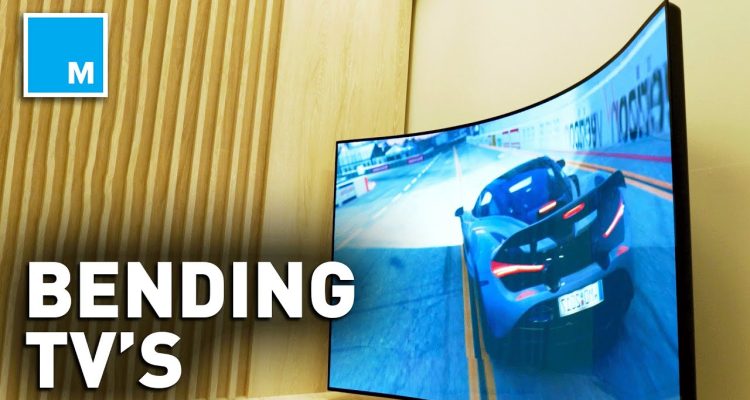
For over half a century, the display has been a rigid window—a fixed rectangle containing our digital worlds. But what if that window could unfurl like a scroll, become as transparent as glass, or morph to fit any surface? This isn’t science fiction; it’s the tangible roadmap of companies like LG Display, who are fundamentally reimagining the screen’s role in our lives. Their vision moves us from merely watching displays to interacting with our environments in seamless, almost magical ways. Let’s explore the technologies making this possible.
The Rollable Revolution: The Screen That Retreats
The pinnacle of LG’s flexible display ambition is arguably the Rollable OLED. Imagine a 65-inch television that, at the touch of a button, silently retracts into a minimalist box, reclaiming your living space. This isn’t just a neat trick; it’s a paradigm shift in human-device interaction.
The magic lies in a complex, ultra-thin polymer substrate that replaces traditional rigid glass. This flexible base layer, combined with self-emissive OLED pixels, allows the screen to roll into a cylinder barely wider than a water bottle. The engineering challenges—protecting the panel from dust, moisture, and repeated stress—are monumental. Yet, the payoff is profound: technology that adapts to human behavior, appearing only when needed and otherwise disappearing. For a deeper look at the consumer electronics trends driving this demand for adaptable tech, analyses from The Verge often explore how form factors are evolving to suit modern living spaces.
Transparent OLED: When the Screen Becomes a Window
If Rollable OLEDs are about discreteness, Transparent OLEDs are about integration. These displays, which look like clear glass panels when off, can overlay information, data, or media onto the real world. In a retail store, a transparent screen in a refrigerator door can show inventory or recipes while you see the food inside. In an automotive heads-up display, critical driving data is projected onto the windshield. In the home, it could be a smart kitchen counter or a bathroom mirror that displays the news.
This technology removes the barrier between digital content and physical space, enabling a new layer of contextual computing. It’s a foundational step toward the ambient computing future envisioned by many tech leaders. The potential architectural and commercial applications are vast, a topic frequently covered by design and innovation platforms like Dezeen.
The Foundation: Why OLED is the Key
Both these futuristic concepts rely on the inherent advantages of OLED (Organic Light-Emitting Diode) technology. Unlike LCD/LED screens that require a separate backlight, each pixel in an OLED panel produces its own light. This allows for:
-
Perfect Blacks and Infinite Contrast: Pixels can turn off completely.
-
Ultra-Thin and Flexible Form Factors: No rigid backlight unit is needed.
-
Inherent Transparency: By carefully designing the cathode and anode layers, light can pass through the panel.
LG’s continued R&D investment in OLED material science and manufacturing is what allows these concept displays to move from lab prototypes to commercial realities, albeit often in specialized markets first.
From Concept to Reality: The Integration Challenge
The true test of this vision isn’t just making a flexible or transparent panel; it’s integrating it into products and ecosystems that feel intuitive. The next challenges are:
-
Durability & Reliability: Ensuring these delicate displays can withstand years of daily use.
-
Content & UI Design: How do you design software for a screen that can be a rectangle, a curve, or completely see-through? This requires a new design philosophy.
-
Finding the “Killer App”: For transparent displays, especially, moving beyond dazzling demos to must-have applications is crucial. The path from concept to mass-market product is a complex one, a journey well-documented by industry watchers at DisplayDaily.
A Glimpse into the Ambient Future
LG’s display vision points toward an ambient future. In this future, displays won’t be devices we stare at, but intelligent surfaces embedded in our world—on walls, in furniture, and in our vehicles—providing information and interaction only when contextually relevant. The rigid black rectangle will become an antique.
While rollable TVs may remain a premium product and transparent OLEDs a commercial solution for now, the underlying technologies are filtering down. They represent a crucial belief: that the interface between humans and digital information should be fluid, adaptable, and, when possible, invisible. The goal is no longer just a better picture, but a better, more integrated experience