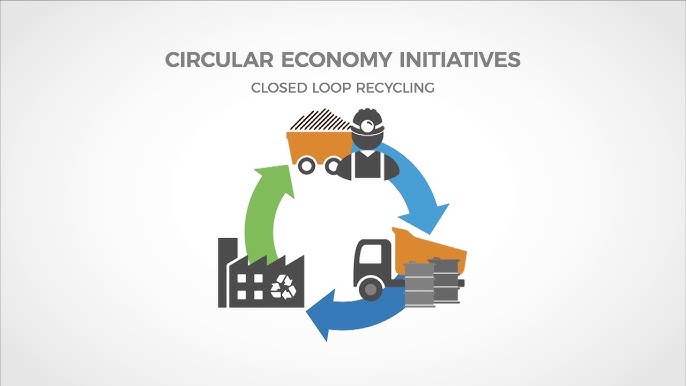
Closing the Loop: LG’s Tangible Commitment to Recycled Materials and a Circular Economy
Moving beyond the “take-make-dispose” model, LG Electronics is actively engineering a more sustainable future by embedding circular economy principles at the core of its design and manufacturing. Their commitment goes beyond pledges, focusing on tangible steps to close the loop through innovative use of recycled materials, sustainable product design, and ambitious zero-waste goals. This is how LG is turning the theory of circularity into practice.
From Waste to Resource: Pioneering Post-Consumer Recycled (PCR) Plastics
A cornerstone of LG’s strategy is its significant investment in post-consumer recycled (PCR) plastics. Instead of relying on virgin plastics, LG is transforming discarded consumer waste—like old bottles and electronics—into high-quality resources.
-
Scale & Application: In 2023 alone, LG used tens of thousands of tons of PCR plastic in products ranging from OLED TVs and soundbars to refrigerators, washing machines, and air purifiers.
-
Maintaining Quality: A key innovation is LG’s ability to process and refine these materials to meet the same durability, safety, and aesthetic standards as new plastics, proving that sustainable materials do not require a compromise in performance.
Designing for the Entire Cycle: Durability, Repairability, and Recycling
True circularity begins at the drawing board. LG’s eco-friendly design philosophy focuses on the entire product lifecycle:
-
Extended Product Lifespan: By designing for durability and offering enhanced repair programs with genuine parts, LG combats planned obsolescence and keeps products in use longer—the most fundamental principle of a circular business model.
-
Design for Disassembly: Newer models are increasingly designed for easier disassembly at end-of-life, facilitating more efficient material recovery and responsible recycling.
-
Global Recycling Partnerships: LG collaborates with global e-waste recyclers to ensure that products are properly processed, recovering valuable metals and plastics to feed back into the manufacturing loop.
Closing the Loop in Operations: Zero Waste to Landfill
LG’s circularity mission extends to its own factories. Many LG manufacturing sites worldwide have achieved “Zero Waste to Landfill” certification by:
-
Maximizing material efficiency in production.
-
Implementing rigorous waste segregation.
-
Finding ways to reuse, recycle, or convert all byproducts, dramatically reducing industrial waste.
The Bigger Picture: Aligning with Carbon Neutrality and ESG Goals
This focus on recycled content and circular systems is a direct driver of LG’s broader sustainability commitments:
-
Reducing Carbon Footprint: Using PCR plastic generates far fewer greenhouse gas emissions than producing virgin plastic, supporting LG’s carbon neutrality roadmap.
-
Conserving Resources: It reduces dependency on fossil fuels and diverts plastic waste from oceans and landfills, directly addressing plastic pollution.
-
ESG Leadership: These concrete actions strengthen LG’s ESG (Environmental, Social, and Governance) performance, offering measurable proof of their commitment to corporate sustainability.
Conclusion: Building a Loop, One Product at a Time
LG’s work with recycled materials is a critical piece in building a viable circular economy. By investing in PCR plastic technology, designing for longevity, and managing operational waste, LG is creating a closed-loop system that minimizes environmental impact. For consumers, this means choosing products that are not only advanced but are also part of a responsible consumption solution. It’s a clear signal that for LG, “closing the loop” is an operational imperative, not just an aspirational slogan.